Selecting reliable equipment suppliers requires more than comparing factory photos or advertised prices. This introduction explores China’s Top 10 Pallet Transfer Conveyor Manufacturers through practical purchasing criteria, including engineering experience, product quality, customization capability, and after-sales support. A Pallet Transfer Conveyor must move heavy loads smoothly, accurately, and safely across production lines. Its performance affects warehouse flow, labor efficiency, and equipment maintenance.
The evaluation considers manufacturers serving industries such as automotive parts, packaging, warehousing, food processing, and general material handling. Key details include conveyor frame construction, roller or chain design, transfer speed, load capacity, control systems, and integration with existing automation. Certifications, testing records, installation experience, and customer references also deserve careful attention. A supplier may offer advanced technology, but poor documentation can still create avoidable delays.
No list is perfect. Rankings can change.
Market information is often incomplete, and some manufacturers present similar product claims. Therefore, readers should verify current factory capabilities, export experience, response times, and spare-parts availability before signing a contract. Site visits, video inspections, sample testing, and clear technical drawings can reveal differences that brochures hide. In real projects, small details matter, such as transfer height, pallet dimensions, sensor placement, noise levels, and cleaning access. This guide aims to provide a balanced starting point, not an unquestionable verdict. It combines observable industry factors with practical procurement concerns, while recognizing that the best manufacturer depends on the application, budget, timeline, and required automation level. Some conclusions may need revision after direct supplier audits. That is part of responsible research.
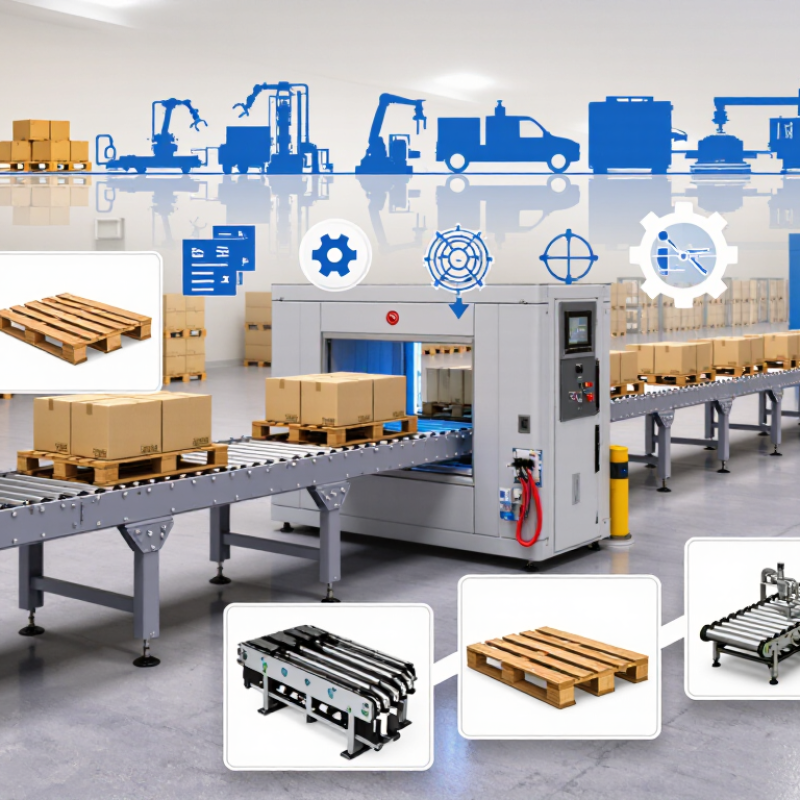
A pallet transfer conveyor is a powered or automated system that moves pallets between conveyor lines, workstations, storage areas, or production zones. It changes a pallet’s direction without requiring manual handling. Common designs use chains, rollers, belts, lift tables, or shuttle platforms.
In a warehouse, a pallet may travel forward, stop, rise slightly, and move sideways onto another line. Sensors confirm its position before the transfer begins. This prevents collisions and reduces product movement during handling. The conveyor frame must support the pallet’s weight, load balance, and operating speed. A weak frame can create vibration, noise, and costly delays.
Experienced integrators check pallet dimensions, floor conditions, transfer height, and control signals before selecting equipment. They also examine access for cleaning and maintenance. Emergency stops and guarded moving parts support safer operation. In practice, the first layout is rarely perfect. Small clearance errors can cause large problems. A test pallet should run through every transfer point before full production starts. Operators should record jams, unusual sounds, and sensor failures during trials. This evidence helps improve reliability and makes future supplier comparisons more objective.
| No. | Pallet Transfer Configuration | Transfer Principle | Typical Load Capacity | Best Transfer Direction | Main Advantages | Typical Applications |
|---|---|---|---|---|---|---|
| 1 | Chain Transfer Conveyor | Parallel chains lift or carry the pallet and move it to an adjacent line. | Approximately 500–2,000 kg | 90° transfer | Strong load support, reliable positioning, and suitable for heavy or rigid-bottom pallets. | Automotive components, warehouse staging, production lines, and heavy manufacturing. |
| 2 | Pop-Up Roller Transfer | Powered rollers rise above the main conveyor surface, move the pallet sideways, and retract afterward. | Approximately 300–1,500 kg | 90° transfer | Compact design, easy integration, and minimal interference with the main conveying route. | Distribution centers, packaging lines, pallet sorting, and cross-docking systems. |
| 3 | Scissor Lift Transfer Table | A powered lift platform raises or lowers a pallet to match different conveyor elevations. | Approximately 500–3,000 kg | Vertical or level change | Handles substantial height differences and can combine lifting with roller or chain transfer. | Multi-level warehouses, loading docks, assembly cells, and platform interfaces. |
| 4 | Turntable Pallet Conveyor | A rotating platform changes the pallet’s travel direction while maintaining a fixed transfer point. | Approximately 500–2,000 kg | 90° or 180° turn | Flexible routing, smooth direction changes, and efficient use of floor space. | Warehouse loops, palletizing cells, production routing, and order consolidation. |
| 5 | Pallet Shuttle Transfer Unit | A motorized shuttle travels along rails to collect and deliver pallets between parallel lanes. | Approximately 500–1,500 kg | Parallel-lane transfer | High storage density, reduced fixed conveyor length, and automated lane allocation. | High-density storage, cold storage, buffer warehouses, and automated distribution centers. |
| 6 | Belt Transfer Conveyor | A continuous belt carries the pallet or load across a transfer section. | Approximately 100–1,000 kg | Straight or angled transfer | Good traction, controlled acceleration, and suitability for unstable or uneven loads. | Cartonized pallets, clean production environments, packaging, and unit-load handling. |
| 7 | Roller Conveyor Transfer Section | Motor-driven rollers provide the conveying force and can be arranged as a dedicated transfer module. | Approximately 300–2,000 kg | Straight-line transfer | Modular construction, accessible maintenance, and compatibility with sensors and stops. | General warehousing, manufacturing, shipping, receiving, and accumulation zones. |
| 8 | Pallet Lift and Transfer Conveyor | A lift mechanism raises the pallet, transfers it at an upper level, and lowers it onto a destination conveyor. | Approximately 500–2,500 kg | Vertical plus horizontal | Connects separate elevations without a long ramp and supports automated routing. | Building-to-building links, mezzanines, production floors, and vertical warehouse systems. |
| 9 | AGV Interface Transfer Conveyor | A fixed conveyor exchanges pallets with an automated guided vehicle or autonomous mobile robot. | Approximately 300–1,500 kg | Point-to-point transfer | Supports flexible automation, reduced manual handling, and software-controlled material flow. | Smart factories, line-side delivery, finished-goods movement, and automated warehouses. |
| 10 | Pallet Accumulation Transfer Conveyor | Controlled zones store and release pallets individually or in groups before transfer to the next process. | Approximately 300–2,000 kg | Inline or zoned transfer | Buffers production differences, reduces blockage, and enables controlled pallet release. | Food and beverage, consumer goods, packaging, dispatch, and warehouse buffering. |
When evaluating Chinese pallet conveyor manufacturers, do not start with catalog price. China’s total social logistics value reached RMB 360.6 trillion in 2023, rising 5.2%, according to the China Federation of Logistics and Purchasing. This scale indicates strong manufacturing capacity, but it does not prove project competence. Ask for factory videos, weld inspection records, motor test data, and references involving similar pallet weights. A reliable supplier should explain accumulation tolerance, transfer timing, and emergency stops clearly. Vague claims are warning signs.
Technical evidence matters more than polished brochures. The MHI 2024 Annual Industry Report found that 55% of respondents viewed supply chain innovation as a competitive differentiator. Therefore, assess how each manufacturer handles integration, not only conveyor fabrication. Check load calculations, chain or roller life estimates, PLC documentation, safety circuits, and factory acceptance testing. Review quality systems such as ISO 9001, then verify actual records. Certification alone is not enough.
Not every low quote is economical. Compare throughput, energy use, spare-part availability, installation support, and response times. Request a written performance guarantee. Include pallet dimensions, maximum load, speed, duty cycle, and ambient conditions. I would also test several pallets with damaged edges or uneven loads. Real operations are rarely perfect. My evaluation can still miss hidden software limitations, especially when technical documents are translated poorly. That risk deserves direct questioning before payment.
This chart presents a practical procurement-weighting model for comparing pallet transfer conveyor manufacturers in China. The suggested weights emphasize technical performance, production capability, customization, safety, quality control, delivery reliability, and after-sales support rather than company names or brand rankings.
China’s Top 10 Pallet Transfer Conveyor Manufacturers
China’s top 10 pallet transfer conveyor manufacturers are best compared through evidence, not attractive catalogs. A reliable shortlist should show factory experience, tested load ratings, and clear project references. Engineers normally inspect frame welding, roller alignment, sensor response, and emergency-stop access. These details affect every pallet movement.
Many experienced suppliers build chain transfers, roller transfers, turntables, and lift platforms for warehouses and production lines. They should explain pallet dimensions, weight range, speed, transfer height, and control-system interfaces before quoting. Good technical teams provide layout drawings, risk assessments, spare-parts lists, and commissioning support. Ask for performance data from similar environments. A clean factory visit helps, but it proves little without operating tests.
Selection is rarely perfect. A low price may hide weaker bearings, limited software support, or difficult maintenance access. Some manufacturers communicate quickly but document changes poorly. That weakness matters during installation. Request sample pallets, factory acceptance testing, noise measurements, and written warranty terms. Check whether local technicians can respond within a practical timeframe. The strongest candidates combine manufacturing capacity with careful engineering and honest limits. Even then, site conditions can expose assumptions. Humidity, uneven floors, mixed pallet quality, and frequent stops may change the final result.
China’s top pallet transfer conveyor manufacturers compete through practical engineering, not catalog size. Key products include chain-transfer units, roller conveyors, lift tables, turntables, pallet dispensers, and accumulation lines. Heavy-duty models commonly use steel frames, guided rollers, servo drives, and programmable controls. These systems move loaded pallets between production cells, warehouses, and dispatch areas.
Technology separates serious suppliers from simple fabricators. Look for photoelectric sensing, barcode or RFID tracking, variable-speed drives, safety interlocks, and remote diagnostics. China remains important to this field. The International Federation of Robotics reported 276,288 industrial robot installations in China during 2023, representing 51% of global installations. That automation base increases demand for conveyors that communicate with robots, storage systems, and manufacturing execution software.
Applications vary sharply. Food and beverage plants need washdown-friendly surfaces and stable pallet control. Automotive facilities require precise positioning and high cycle rates. E-commerce warehouses prioritize accumulation density and rapid routing. MHI’s 2024 Annual Industry Report identified robotics and automation as major investment priorities across supply chains.
However, rankings can mislead. A low-cost conveyor may pass a factory test but fail under uneven pallets, dust, or frequent stops.
I would inspect welded joints, motor heat, spare-parts access, software records, and tested load capacity. Request a full-load trial. Also question optimistic throughput figures; real performance often changes with pallet damage, operator habits, and layout constraints.
A top-ten list is only a starting point. The right manufacturer must match your pallet size, load weight, transfer direction, and production rhythm. Share accurate drawings, including pallet length, width, height, and underside clearance. Small measurement errors can cause serious alignment problems.
Visit the factory, if possible. Observe welding quality, cable routing, guarding, and final assembly. Ask how many similar systems they have delivered. Request installation photos, customer references, and performance data from comparable projects. Ask for evidence. A polished showroom does not prove reliable engineering.
Review the technical proposal line by line. It should define conveyor speed, transfer accuracy, motor capacity, control hardware, safety devices, and spare parts. Confirm whether the manufacturer performs factory acceptance testing before shipment. A live test with your pallet sample is more useful than a general promise. Check export experience, documentation quality, response time, and after-sales support. Clear English helps, but technical clarity matters more.
Compare the complete cost, not only the initial quotation. Include packaging, commissioning, training, replacement parts, and future maintenance. Some low bids become expensive after installation. I have seen projects overlook floor tolerances and local power requirements. That mistake is easy to repeat. Leave room for design review, because the first specification is rarely perfect.
Are you still planning to build your shipping container home this year? How about you could save up to $5,000 in delivery costs towards your project?
With the Tiny Home Expos in Brisbane, Adelaide and Canberra in the coming months, we are offering FREE DELIVERY (*up to $5000) to each state the Expo is in, in exchange with using your project as a display at the show. Offer expires 8 weeks before each Expo and limited to ONE project per Expo ONLY so reach out to us now to secure your spot!
Enquire Now