China Top Fast Drying Epoxy Resin Manufacturers

China’s fast-drying epoxy resin market is expanding beyond simple speed claims. Buyers now examine bond strength, working time, heat resistance, and long-term stability. Fast Drying Epoxy Resin can reduce production delays, but curing speed alone does not prove quality.

Edward M. Petrie, author of Epoxy Adhesive Formulations, offers a practical warning: “Adhesive performance depends on the complete formulation, not one impressive property.” This principle matters when comparing Chinese manufacturers. A reliable supplier should explain resin grades, hardener ratios, recommended temperatures, and surface preparation requirements. Clear technical data builds confidence.

In real production, details become visible. A factory may need a resin that cures within eight minutes at 25°C. Another may require flexible bonding for aluminum panels exposed to vibration. Uneven mixing, cold workshops, or dusty surfaces can weaken even a high-quality system. Small errors matter.

Look for evidence.

Experienced manufacturers usually provide technical data sheets, batch traceability, sample testing, and application guidance. Independent testing can verify tensile strength, adhesion, viscosity, and thermal performance. Certifications are useful, though they should not replace practical trials.

This guide examines China’s top fast-drying epoxy resin manufacturers through a buyer’s lens. It considers formulation expertise, production capacity, customization, quality control, and export support. Some suppliers may appear similar online. They are not always equal in laboratory discipline or after-sales communication. That difference deserves closer attention before a purchase decision.
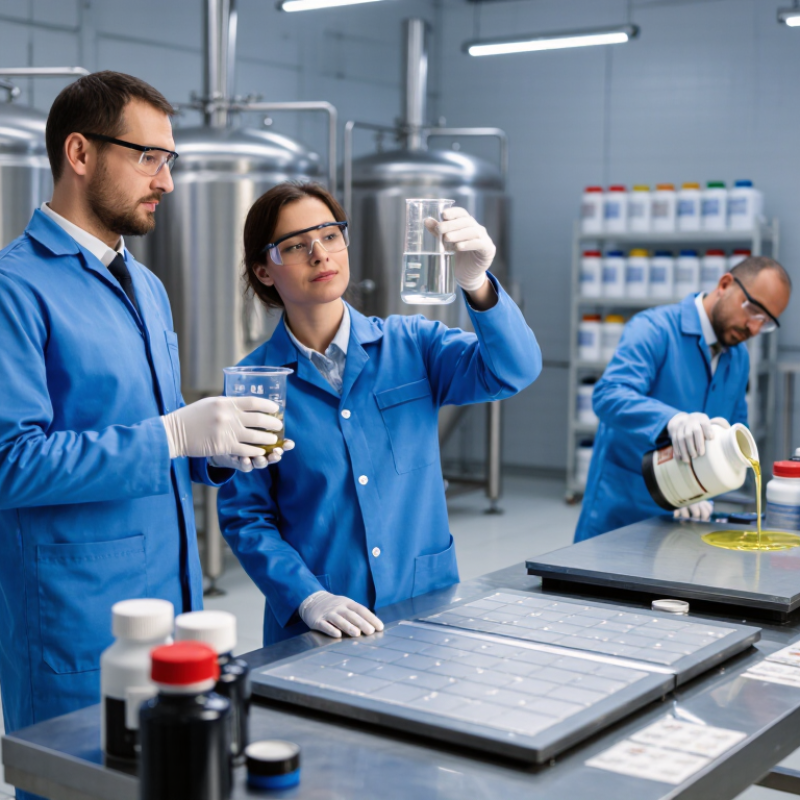
China Top Fast Drying Epoxy Resin Manufacturers

What Is Fast-Drying Epoxy Resin?

Fast-drying epoxy resin is a two-part thermosetting material. It combines epoxy resin with a reactive hardener. The mixture changes from liquid into a solid through chemical cross-linking. Nothing simply “dries” away. It cures.

Its main advantage is a shorter working schedule. A quick formulation may become touch-dry within minutes or hours. Full strength can take much longer. Always check the technical data sheet. “Fast” is not a universal measurement. Actual performance depends on several details. Warmer rooms usually accelerate curing, while cold surfaces slow it. Incorrect mixing can leave soft patches or sticky edges. A digital scale, clean container, and slow stirring improve consistency. Avoid whipping air into the resin.

A thin coating on a wooden panel may cure faster than a deep pour. Thick layers can generate heat during the reaction. Excess heat may cause bubbles, discoloration, or cracking. Humidity and dusty surfaces also affect the finish. Small test batches are worth the extra material. In industrial evaluation, technicians record mix ratio, gel time, tack-free time, and hardness. These checks reveal more than a quick finger touch. I would not judge quality by speed alone. That shortcut often creates rework. Read the safety instructions, use suitable protection, and ventilate the workspace.

What Is Fast-Drying Epoxy Resin?

Typical gel-time reduction in fast-curing epoxy systems as temperature increases

Fast-drying epoxy resin uses accelerated curing chemistry to reach gelation and handling strength sooner than conventional systems. The chart shows representative midpoint values for typical gel-time ranges: approximately 30–60 minutes at 25°C, 15–30 minutes at 40°C, 5–15 minutes at 60°C, and 2–8 minutes at 80°C. Actual performance depends on resin formulation, hardener ratio, layer thickness, humidity, and heat transfer.

Key Features of China’s Fast-Drying Epoxy Resin Manufacturers

China’s fast-drying epoxy resin manufacturers increasingly compete through formulation control, not speed alone. MarketsandMarkets valued the global epoxy resin market at about USD 12.1 billion in 2023 and projects steady growth through 2028. This demand raises expectations for shorter curing cycles, stable viscosity, and reliable bonding.

Strong manufacturers usually operate controlled mixing rooms and test each batch for gel time, hardness, adhesion, and heat resistance. A practical supplier should provide technical data sheets, safety documentation, and traceable lot numbers. Some facilities use automated dosing systems to reduce ratio errors. That matters when a small mixing deviation can leave a surface soft or cloudy. Fast cure is useful. Excessive speed can reduce working time and create uneven heat.

The China National Coatings Industry Association has reported continuing growth in domestic industrial coatings output, supporting wider resin application in electronics, flooring, transport, and components. Manufacturers with export experience often adapt formulas for humidity, substrate type, and regional regulations. They may also offer low-odor or lower-emission systems, although performance claims need independent verification. No supplier balances every requirement perfectly. Buyers should request pilot samples, measure curing under actual plant conditions, and compare three production batches instead of trusting one impressive test.

How Chinese Manufacturers Produce Fast-Drying Epoxy Resin

Fast-drying epoxy resin production in China combines controlled chemistry with disciplined factory practice. Manufacturers select low-viscosity epoxy polymers, reactive diluents, and curing agents for balanced performance. Formulators adjust accelerator levels to shorten gel time without creating excessive heat. Small laboratory batches are tested before pilot production begins. Technicians measure viscosity, pot life, hardness, adhesion, and cure speed at defined temperatures. These records support repeatability and help identify drift between batches. The process looks simple. It is not.

In modern Chinese facilities, automated dosing systems weigh raw materials into stainless-steel vessels. Vacuum mixing removes trapped air and improves clarity. Temperature sensors guide heating because uncontrolled exothermic reactions can damage resin performance. After blending, the material passes through filtration and enters moisture-resistant containers. Quality teams retain samples for later comparison. They also test accelerated aging, since a fast cure can reduce flexibility or working time. That trade-off deserves attention. Production teams may revise formulas after field feedback, even when laboratory results appear acceptable.

Tips: Check the technical data sheet for mix ratio, pot life, and full-cure time. Ask for batch-specific test results, not only general specifications. Store resin and hardener in sealed containers at recommended temperatures. Apply thin layers when possible; thick pours generate more heat and may cure unevenly. Always test a small sample on the actual substrate. Real surfaces can behave differently.

China Top Fast Drying Epoxy Resin Manufacturers - How Chinese Manufacturers Produce Fast-Drying Epoxy Resin
Manufacturing Stage Common Materials or Equipment Typical Industrial Parameters Quality-Control Focus Contribution to Fast Drying
Epoxy Resin Selection Liquid bisphenol-A epoxy resin, commonly based on diglycidyl ether of bisphenol A (DGEBA) Epoxy equivalent weight: approximately 180–200 g/eq for many standard liquid grades Epoxy equivalent weight, color, hydrolyzable chlorine, viscosity, and water content Provides a consistent reactive epoxy concentration for predictable curing speed and final properties
Reactive Diluent Adjustment Mono- or multifunctional glycidyl ethers compatible with the epoxy resin system Often used at approximately 5–20 parts per hundred resin, depending on viscosity and performance requirements Viscosity, epoxy functionality, compatibility, volatility, and mechanical-property retention Reduces viscosity and improves wetting, allowing the curing components to mix and react more uniformly
Curing-Agent Selection Modified amines, polyamines, amidoamines, cycloaliphatic amines, or latent curing agents Stoichiometric ratio is calculated from the epoxy equivalent weight and the curing agent's amine hydrogen equivalent weight Amine value, equivalent weight, moisture content, compatibility, pot life, and cure profile Fast-reacting curing agents shorten gel time and reduce the time required to reach a tack-free surface
Accelerator Incorporation Tertiary amines, imidazoles, urea-based accelerators, or other approved catalytic additives Common formulation levels are approximately 0.5–3% by weight, subject to compatibility and safety evaluation Gel time, exotherm, storage stability, color, and compatibility with the curing agent Promotes epoxy ring-opening reactions and accelerates cross-link formation, particularly at ambient temperature
Controlled Heating and Mixing Jacketed stainless-steel mixing vessel with anchor, planetary, or high-shear agitator Typical processing temperature: approximately 40–60°C; mixing speed is adjusted to avoid excessive air entrainment Batch temperature, mixing uniformity, viscosity, and prevention of localized overheating Lowers viscosity and improves dispersion of additives without prematurely initiating the cure reaction
Filler and Additive Dispersion Silica, calcium carbonate, aluminum hydroxide, pigments, tougheners, defoamers, and flow-control additives Loading varies widely; fine fillers are commonly dispersed under controlled shear and temperature Particle-size distribution, dispersion quality, sedimentation resistance, and moisture level Uniform dispersion prevents local cure variation, surface defects, and weak areas that can delay practical drying
Vacuum Deaeration Vacuum-capable mixing tank or separate vacuum deaeration vessel Often performed at approximately 50–200 mbar absolute pressure, depending on viscosity and foaming behavior Bubble removal, foam control, batch weight, and surface appearance Removes entrained air and moisture that can cause pinholes, bubbles, incomplete curing, or a tacky surface
Filtration and Transfer Inline bag, cartridge, or basket filtration system Filter ratings commonly range from approximately 25–100 μm, depending on filler content and product type Foreign-particle count, pressure drop, flow rate, and contamination control Improves surface finish and helps prevent local defects that interfere with uniform film formation
Two-Component Packaging Separate moisture-resistant containers, dual cartridges, or matched resin-and-hardener kits Resin and curing agent are packaged separately until application; mix ratios are controlled by mass or volume Mix ratio accuracy, package sealing, net content, labeling, and storage stability Prevents premature reaction during storage and allows rapid curing immediately after the components are combined
Ambient Cure Verification Temperature-controlled laboratory, stopwatch, gel-time equipment, and hardness-testing instruments Fast ambient systems may reach a tack-free condition in approximately 1–4 hours at 23–25°C; exact results depend on formulation and film thickness Pot life, gel time, tack-free time, Shore hardness, adhesion, and appearance Confirms that the formulation achieves the required practical drying time under specified application conditions
Accelerated Cure Verification Convection oven or controlled heating chamber Many epoxy systems can cure significantly faster at approximately 50–80°C, but the specific temperature must match the substrate and formulation Time to handling strength, glass-transition behavior, hardness development, and thermal stability Elevated temperature increases reaction rate and can reduce the time needed to achieve functional strength
Final Release Testing Viscometer, density cup, moisture analyzer, adhesion tester, hardness tester, and chemical-resistance test equipment Testing is performed against an internal specification and the declared application conditions Viscosity, density, color, epoxy equivalent weight, mix ratio, gel time, adhesion, hardness, and storage stability Ensures batch-to-batch consistency so that drying speed and cured performance remain reproducible
Typical values shown are industry-oriented reference ranges for fast-curing epoxy formulations. Actual parameters vary according to resin chemistry, curing-agent type, filler loading, film thickness, ambient temperature, and intended application.

Quality Standards and Testing Methods in China

China’s leading fast-drying epoxy resin manufacturers increasingly compete through measurable quality, not curing speed alone. The 2024 China Epoxy Resin Industry Report estimated domestic production capacity above 2 million tonnes annually. This scale makes batch consistency critical. Buyers should request viscosity records, gel-time data, and certificate-of-analysis documents for every production lot.

Laboratories commonly test viscosity at 25°C, gel time under specified temperatures, and cure behavior through differential scanning calorimetry. ASTM D638 measures tensile strength, while ASTM D695 evaluates compressive performance. ASTM D4541 helps verify coating adhesion after curing.

Water absorption and accelerated aging tests expose weaknesses that simple surface inspections miss. A resin may cure quickly, yet remain brittle. That is an uncomfortable quality gap.

Tips: Ask for three consecutive batch reports, not one excellent sample. Compare viscosity variation, gel time, tensile strength, and adhesion results. ISO 9001 certification supports process control, but it does not guarantee resin performance. China’s national standards also provide useful testing frameworks, yet laboratories may interpret conditioning times differently. Confirm temperature, humidity, specimen thickness, and curing schedule before comparing results. A small testing mistake can create a large purchasing decision.

How to Select a Reliable Chinese Epoxy Resin Manufacturer

China Top Fast Drying Epoxy Resin Manufacturers

Selecting a reliable Chinese epoxy resin manufacturer requires more than comparing prices. Fast drying resin may shorten production time, but it can also reduce working time and complicate application. An experienced buyer should request technical data sheets, safety documents, batch records, and recent test results. Check viscosity, gel time, curing temperature, adhesion, and hardness under your actual conditions.

I have found that small samples reveal problems early. Apply the resin to your real substrate, then observe it after 24 and 72 hours. Look for bubbles, uneven curing, surface tackiness, or color changes. Ask whether the manufacturer controls raw materials, production temperatures, and batch traceability. Factory videos are useful, but an independent audit is stronger evidence. Certifications help, though they should not replace practical testing. One weakness remains: laboratory results may not match outdoor humidity or winter temperatures.

Tips: Ask for three consecutive batch samples. Compare their curing results. Confirm minimum order quantities, lead times, packaging, and storage conditions in writing. A dependable supplier should explain failed-test procedures, not only advertise performance. Clear communication matters. Insist on a named technical contact and a written response schedule. Never approve a large order from one successful sample alone. Reliability is demonstrated over time, through consistent batches and honest problem solving.

ENQUIRE NOW
close
Get In Touch

Use the form below to drop us an email if you have any question or comments.