China Top 10 Biodegradable Non Woven Fabric Manufacturers

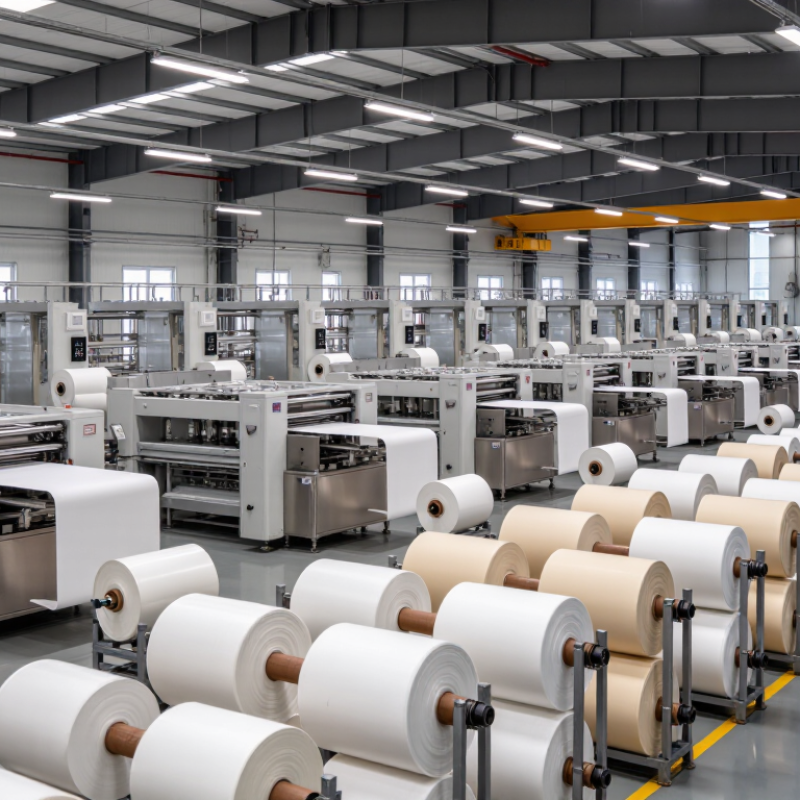
China has become a major production base for advanced nonwoven materials, supported by extensive textile capacity, export networks, and process engineering expertise. This article examines China’s top 10 Biodegradable Non Woven Fabric manufacturers through practical, measurable criteria. These criteria include raw-material traceability, production scale, certification, fiber technology, quality control, and overseas service capability.

Industry data shows why this market deserves closer attention. Smithers’ The Future of Global Nonwovens to 2028 identifies hygiene, medical, filtration, and sustainable applications as important growth areas. Its analysis also highlights continuing investment in spunbond, meltblown, and composite nonwoven production. Grand View Research reports steady expansion in the global biodegradable plastics market, driven by packaging, agriculture, and consumer-product demand. These trends support wider interest in biodegradable fabric solutions, although market estimates vary by definition and region.

Real performance matters more than marketing language. A credible supplier should explain whether its fabric uses PLA, cellulose, viscose, or blended fibers. It should also provide test evidence for biodegradation, tensile strength, air permeability, and composting conditions. Certifications such as EN 13432, ASTM D6400, ISO 17088, or relevant TÜV standards can strengthen evaluation, but certification scope must be checked carefully.

Some rankings remain imperfect. Public production data is often incomplete, and “biodegradable” may describe only one component. Buyers should request samples, audit production sites, and verify laboratory reports before placing large orders. This guide offers a practical starting point for comparing leading Chinese manufacturers and identifying suppliers with dependable technical and environmental claims.

China Top 10 Biodegradable Non Woven Fabric Manufacturers

Biodegradable Nonwoven Fabric: Definition, Materials, and Environmental Value

Biodegradable nonwoven fabric is a sheet made from fibers that can break down under suitable conditions. Unlike woven cloth, it uses bonded fibers without traditional yarn structures. Manufacturers form these fibers through spunbond, meltblown, or needle-punch processes. Some feel surprisingly soft.

Common materials include polylactic acid, polyhydroxyalkanoates, cellulose, bamboo fiber, and starch-based blends. Polylactic acid often comes from fermented plant sugars. Cellulose fibers may come from responsibly managed wood or agricultural waste. Material choice affects strength, moisture resistance, breathability, and decomposition behavior. A fabric designed for packaging needs different performance than one used in hygiene products.

Its environmental value depends on the full product life cycle. Biodegradable fabric can reduce persistent plastic waste, but it does not disappear everywhere. Industrial composting may require controlled heat, moisture, oxygen, and microbial activity. Soil, seawater, and landfill conditions can produce very different results. In professional sourcing, I examine composition, processing methods, test conditions, and disposal instructions together. A biodegradable label alone is not enough. I once assumed plant-based content guaranteed quick decomposition. That assumption was too simple.

Reliable manufacturers should provide traceable raw-material records, test reports, and clear degradation conditions. They should also measure fabric durability before replacing conventional materials. A weaker product may create more waste through early failure. Environmental value comes from verified performance, responsible sourcing, and realistic end-of-life planning. Clear documentation matters.

China Top 10 Biodegradable Non Woven Fabric Manufacturers - Biodegradable Nonwoven Fabric: Definition, Materials, and Environmental Value
No. Biodegradable Nonwoven Material Material Definition and Typical Feedstock Common Nonwoven Manufacturing Routes Typical Product Applications Environmental Value Important Performance or Disposal Considerations
1 Polylactic Acid (PLA) Bio-based thermoplastic polyester commonly produced from fermented plant sugars or starches such as corn, sugarcane, or cassava. Spunbond, meltblown, spunlace, and needle-punch processes. Tea bags, hygiene components, agricultural covers, filtration media, packaging, and disposable textiles. Can reduce dependence on fossil-based polymers and is industrially compostable under suitable conditions. Usually requires controlled industrial composting; degradation is slow in ordinary soil, landfill, or marine environments. Heat resistance is lower than that of many conventional polyolefins.
2 Polyhydroxyalkanoates (PHA) Microbially produced polyesters synthesized by microorganisms from renewable carbon sources. Spunbond, meltblown, extrusion-based web formation, and composite nonwoven production. Medical and hygiene products, agricultural materials, packaging liners, and selected filtration products. Offers biodegradability in a wider range of environments than PLA, with potential for soil and marine degradation depending on formulation and conditions. Material cost, processing stability, and large-scale availability can be limiting factors. Actual degradation depends on thickness, additives, temperature, moisture, and microbial activity.
3 Viscose Rayon Regenerated cellulose fiber made by dissolving and regenerating cellulose, commonly sourced from wood pulp or other cellulose feedstocks. Spunlace, wet-laid, and air-laid nonwoven processes. Wipes, facial masks, medical gowns, absorbent pads, sanitary products, and household cleaning materials. Cellulose-based fibers can biodegrade under suitable biological conditions and are derived from renewable biomass. Biodegradability does not eliminate concerns related to pulping chemicals, wastewater, and forestry management. Responsible sourcing and certified production are important.
4 Lyocell Fiber Regenerated cellulose fiber produced by dissolving cellulose in a direct solvent system and extruding it into fibers. Spunlace, wet-laid, and air-laid processes. Premium wipes, absorbent hygiene products, medical textiles, cosmetic sheets, and filtration substrates. Uses renewable cellulose and can biodegrade under suitable composting or soil conditions. Closed-loop solvent recovery can reduce process emissions and solvent loss. End-of-life behavior is affected by dyes, binders, finishes, and blending with synthetic fibers. The base fiber should not be confused with a fully biodegradable finished product.
5 Cotton Nonwoven Natural cellulose fiber obtained from cotton plants and formed into a web without conventional yarn weaving or knitting. Needle punching, hydroentanglement, thermal bonding with suitable binders, and air-laid processes. Medical dressing, cosmetic pads, wipes, insulation, filtration, and protective packaging. Biodegradable and renewable, with good moisture absorption and relatively low persistence after disposal when untreated. Water, land, pesticide, and fertilizer impacts vary by cultivation method. Finishes, coatings, plastic films, and synthetic blends may significantly reduce biodegradability.
6 Hemp Nonwoven Natural bast fiber from the hemp plant, containing cellulose and lignocellulosic components. Needle punching, spunlace, air-laid, and thermal-bonded composite processes. Automotive interior composites, insulation, geotextiles, packaging, wipes, and erosion-control materials. Renewable plant fiber with biodegradability, good mechanical strength, and potential for lower agricultural input requirements than some conventional fiber crops. Fiber consistency, softness, processing requirements, and regional supply can affect cost and product design. Resin or polymer binders may limit end-of-life biodegradation.
7 Flax Nonwoven Natural bast fiber obtained from flax stems and composed primarily of cellulose. Needle punching, air-laid, wet-laid, and composite molding processes. Automotive panels, insulation, furniture substrates, geotextiles, packaging, and reinforcement mats. Biodegradable and renewable, while offering favorable stiffness-to-weight performance in natural-fiber composites. Moisture sensitivity, variable fiber quality, and compatibility with binders must be managed. Thermoset resin composites are not necessarily biodegradable even when flax is used.
8 Jute Nonwoven Natural lignocellulosic bast fiber mainly cultivated in warm, humid regions and widely used for coarse technical textiles. Needle punching, air-laid, spunlace, and resin-bonded composite processes. Geotextiles, crop covers, erosion-control blankets, shopping bags, packaging, and insulation. Renewable, biodegradable, and useful for temporary land applications where gradual biological breakdown is desirable. Lower resistance to prolonged moisture and biological attack can shorten service life. Heavy coatings, laminations, or synthetic reinforcement can change disposal characteristics.
9 Bamboo Cellulose Nonwoven Cellulose fiber derived from bamboo pulp, commonly processed as regenerated cellulose rather than as untreated bamboo fiber. Spunlace, wet-laid, and air-laid processes. Wipes, cosmetic masks, absorbent products, household textiles, and packaging sheets. Uses a rapidly renewable plant resource and can provide biodegradable cellulose-based performance when free from persistent coatings and synthetic blends. The environmental profile depends on cultivation, pulping chemistry, solvent recovery, bleaching, and wastewater treatment. “Bamboo” labeling alone does not prove biodegradability.
10 Starch-Based Biopolymer Biodegradable material formulated from starches such as corn, potato, wheat, or cassava, often combined with plasticizers or other biodegradable polymers. Film extrusion, meltblown, spunbond, wet-laid, and laminated nonwoven structures. Packaging, agricultural mulch, disposable service items, absorbent products, and short-life protective materials. Uses renewable agricultural feedstocks and can biodegrade or compost under suitable conditions depending on formulation. Moisture sensitivity and lower wet strength are common challenges. Additives, multilayer structures, and contamination can affect compostability and real-world degradation.

How China’s Top 10 Manufacturers Are Selected and Compared

Selecting China’s top 10 biodegradable non woven fabric manufacturers requires more than counting production lines. The evaluation combines factory experience, raw material traceability, testing evidence, and delivery reliability.

European Bioplastics and nova-Institute reported global bioplastics production capacity of about 2.18 million tonnes in 2023.

This growth increases material choices, but it also raises verification risks.

Manufacturers are compared through a weighted scorecard. Compliance and biodegradation evidence receive 25 percent. Product consistency receives another 25 percent. Capacity, quality control, technical development, and export service share the remaining score.

Auditors should review batch records, laboratory reports, fiber composition, and production samples.

Claims should match recognized standards, such as EN 13432 or ASTM D6400, where applicable.

A factory visit can reveal details that brochures omit, including dust control, roll storage, and moisture protection.

The comparison also considers real purchasing experience.

Does the fabric maintain tensile strength after printing?

Are delivery dates stable during peak seasons?

Can the supplier provide traceable compostable fibers instead of vague “eco” descriptions?

Smithers’ market research shows continuing growth in sustainable nonwovens, yet market estimates vary by definition and region. That weakness matters. Public data is often incomplete, and some manufacturers disclose little about capacity or testing.

Therefore, this list should be reviewed annually, supported by current samples, third-party reports, and customer references.

Not perfect. More evidence is always needed.

Profiles of China’s Top 10 Biodegradable Nonwoven Fabric Manufacturers

China’s leading biodegradable nonwoven manufacturers differ more than their websites suggest. This profile compares ten high-capacity producers by fiber selection, production technology, testing, and supply transparency. Some operate spunlace lines for wipes, while others specialize in airlaid or needle-punched materials. Their common options include PLA, bamboo viscose, cellulose, and certified wood-pulp fibers. However, “biodegradable” does not automatically mean home-compostable. Conditions matter.

Industry data gives useful context. Textile Exchange’s Materials Market Report 2024 recorded 124 million tonnes of global fiber production in 2023. It expects production to reach about 160 million tonnes by 2030. European Bioplastics reported global bioplastics capacity of roughly 2.18 million tonnes in 2023. These figures support stronger demand for lower-impact materials, but they do not prove biodegradation performance. Each manufacturer profile should show test methods, decomposition conditions, basis weight, tensile strength, and moisture behavior. Factory experience is valuable here. Marketing language is not enough.

Tips: Request recent laboratory reports, not screenshots. Check whether the material decomposes in industrial composting or soil. Ask for batch-level traceability and wastewater controls. Also compare softness after sterilization, because a fabric can pass an environmental test yet fail during use. The ranking remains imperfect. Public information is uneven, and production capacity can change quickly. A careful buyer should verify ten profiles through samples, audits, and independent testing before approval.

Biodegradable Nonwoven Fabric: Compostability Benchmark

Maximum test periods specified by major industrial-compostability standards

The chart summarizes standardized certification benchmarks relevant to biodegradable nonwoven products. Industrial compostability standards generally require approximately 84 days for disintegration testing and 180 days for substantial biodegradation under controlled test conditions. These are standard requirements, not performance results from individual manufacturers. Actual results depend on fiber composition, additives, fabric weight, and composting conditions.

Production Technologies, Certifications, and Quality Standards

China Top 10 Biodegradable Nonwoven Fabric Manufacturers
Production Technologies, Certifications, and Quality Standards

Chinese manufacturers in this field increasingly combine spunlace, airlaid, needle-punching, and thermal bonding. Cellulose, PLA, and PHA fibers require different web-forming temperatures and moisture controls. A stable line records basis weight, thickness, tensile strength, elongation, and absorbency by production lot. Smithers’ 2024 nonwovens outlook identifies hygiene, medical, and filtration as major demand applications. That demand raises a practical question: can biodegradable performance remain consistent after storage, converting, and use? Often, process discipline matters more than fiber claims.

Certification should match disposal conditions. EN 13432 and ASTM D6400 evaluate industrial compostability, not home composting or marine breakdown. ISO 14855 measures aerobic biodegradation under controlled composting conditions.

European Bioplastics and Nova-Institute reported 2.18 million tonnes of global bioplastics capacity in 2023. Their projection reaches 7.43 million tonnes by 2028. More capacity does not automatically mean better nonwoven quality.

Suppliers should provide ISO/IEC 17025 laboratory reports, formulation records, and traceable certificates. A certificate is not magic. Not proof.

For serious supplier comparisons, audit incoming fiber inspection, pulp dispersion, web uniformity, and edge integrity. Check roll-to-roll variation, seal strength, odor, lint, and contaminant limits.

ISO 9001 supports documented quality systems, while ISO 14001 addresses environmental management. Neither standard proves biodegradability.

Sampling should include aged rolls, not only fresh samples. Often missed. Request disintegration photographs and residual-mass data at defined intervals.

Results can vary between laboratories. Transparent suppliers acknowledge this limitation and repeat testing after raw-material changes.

Applications, Purchasing Factors, and Future Industry Trends

When comparing China’s top ten biodegradable nonwoven fabric manufacturers, buyers should match materials with real applications. Packaging uses often require good sealing, tear resistance, and clean surfaces. Agricultural mats can retain moisture and reduce weed growth around seedlings. Hygiene products demand softness, liquid control, and skin-contact safety. Medical applications require stricter production controls and documented biocompatibility. Performance comes first.

Purchasers should request fiber composition, basis weight, tensile strength, air permeability, and moisture data. Ask how each test was performed. A 30 gsm sheet may feel suitable, yet fail during automated packing or humid storage. Samples should run through the actual production line, not only a quiet laboratory. Buyers also need traceability, production capacity, minimum order quantities, lead times, and shipment protection. For compostable claims, verify recognized certifications and local disposal conditions. Biodegradable is not a universal timeline.

Future demand may favor lighter fabrics, water-based binders, recycled bio-content, and lower-energy production. Manufacturers are developing customized pore structures for filtration, seed protection, and absorbent goods. Digital quality records could improve batch tracking and reduce disputes. However, bio-based feedstocks can fluctuate in price and availability. Some newer materials still lack long-term field data. That uncertainty deserves honest testing.

ENQUIRE NOW
close
Get In Touch

Use the form below to drop us an email if you have any question or comments.